We gather to remember our bodies. To breathe together, move together, lie on the ground until the ground starts to feel like family again. Rooms softening in minutes once we stop performing and start listening — shoulders dropping, breath deepening, a kind of arriving that no instruction can force.
Then we sit down to eat.
The same room that had just spent hours listening to the smallest signal in its own spine sat down to a meal where listening wasn’t necessary at all — convenience, arriving already decided, already packaged, already silent.
I felt that gap in my body — grief, real and physical, not an idea. That gap is everywhere, underneath almost everything, in rooms far more ordinary than a retreat center. We have built entire practices around listening to the body — yoga, breathwork, authentic movement, somatic therapy — and almost all of them stop at the skin. The listening goes inward, toward sensation, toward the nervous system, toward what a held breath is trying to say. It rarely travels outward, past the plate, into the hands that grew what’s on it, the animal who lived a particular life for it, the land that was asked to give it up.
This is the same pattern I have written about with horses, just wearing different clothes. An external rider becomes an internal one — a voice of correction and habit that governs a motion from the inside, deciding after the fact what’s allowed, so quietly it stops registering as a decision at all. With movement, many of us have done real work to find that rider and loosen its grip. With food, almost none of us have. The internal rider there is trained by price, by packaging, by three decades of advertising convenience as care, and it runs almost entirely unexamined — even in rooms full of people who would say, with complete sincerity, that they are devoted to presence.
Food is the most intimate political act most bodies perform three or four times a day, and it is one of the only ones engineered to feel like nothing at all. A supermarket shelf is built to erase every relationship behind it — the plastic, the distance, the caged life, the underpaid hand — so that choosing becomes as simple as reaching. That erasure is not an accident of modern life. It is the product working exactly as designed. Every plate is still a relationship, whether or not the packaging lets us feel it: with land, with an animal who lived a particular kind of life, with the people who grew it, picked it, packed it, shipped it. Distance doesn’t dissolve the relationship. It only removes our ability to sense it.
This is not a case for guilt. The gap is real in all of us, mine included — I am not writing this from outside it, and shame has not once made anyone listen harder to anything. It is a case for finishing a practice that most of us have only half-started. If presence means anything, it cannot stop being relevant at the exact moment it becomes inconvenient. A body that has learned to listen for the subtlest signal in its own spine is fully capable of listening for what’s actually on its plate — the only thing missing is the belief that this listening matters as much as the other kind.
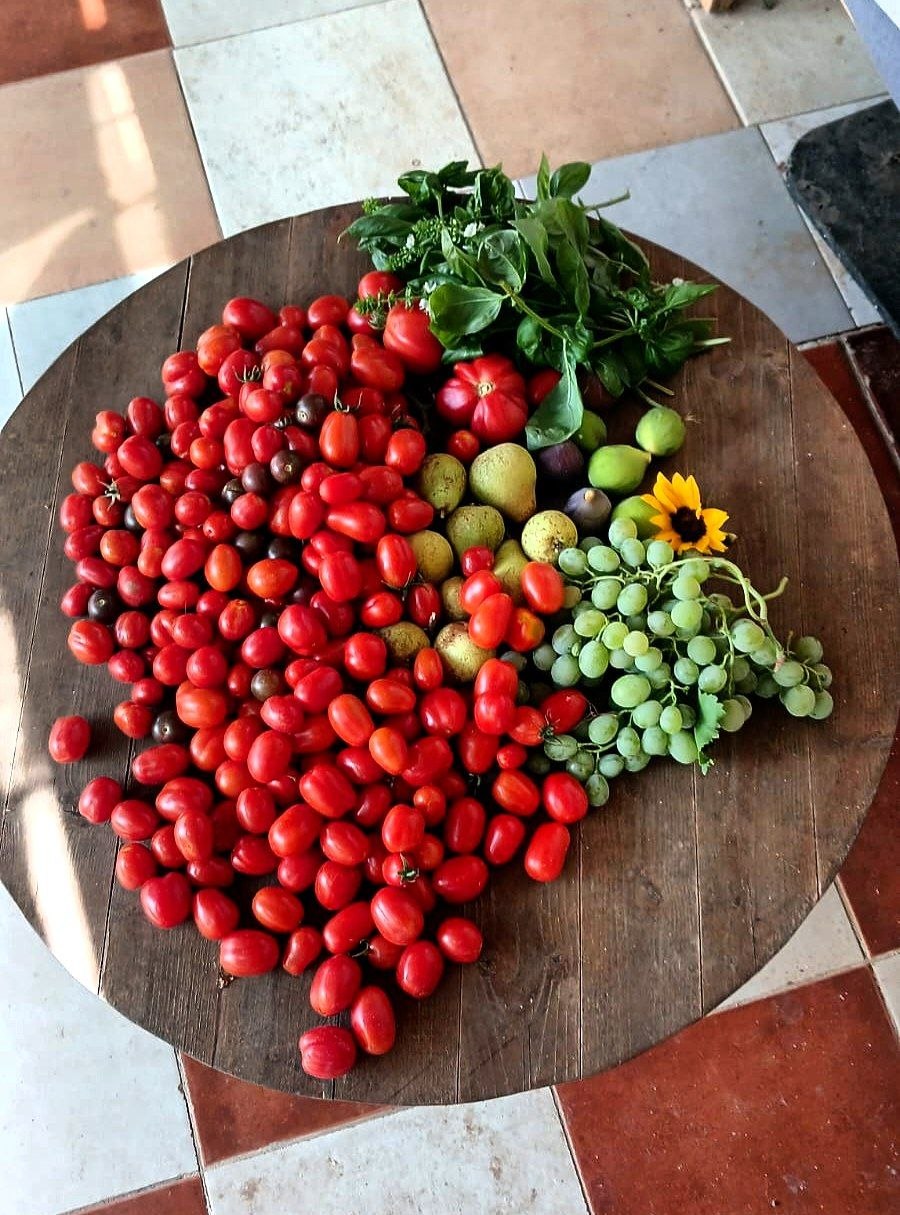
I don’t have this solved either. What I carry instead is a dream — soil I know personally, food grown close enough to touch before it reaches a hand, a kitchen that doesn’t need plastic between a body and a vegetable. Not yet real. Something I am working toward, slowly, because a practice of remembering that stops at the skin was always incomplete.
What would it mean to bring the same listening to the table that we bring to the body in practice — not as an idea to agree with, but as a discipline, repeated three times a day, for the rest of a life?