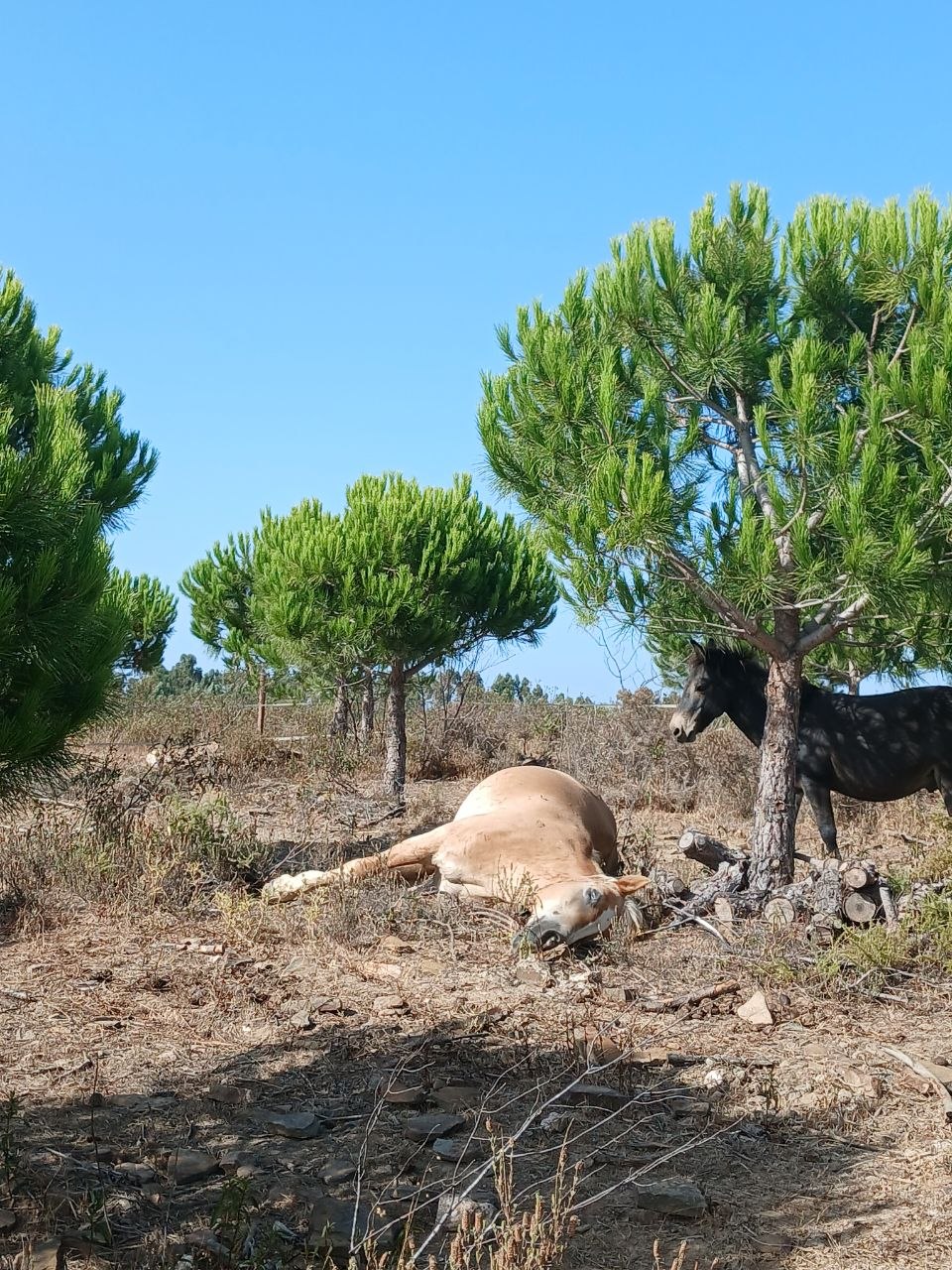
A bit more than two weeks ago, on the day of the full moon, I found the lead mare of the herd dead. She was old and in pain, and it was her time to leave. It was touching to be part of what followed — the grieving of the herd, the quiet that settled over the field for days, and then, slowly, the herd finding its shape again without her. Fanny was her name. She left me with a message:
True leadership restores freedom of choice.
I have been with this since and want to share my reflections here.
For me, leadership has carried a taste of being above others: the leader knows the direction, the leader makes the decisions, the leader tells others what to do. But Fanny never led that way.
She wasn’t the biggest horse in the herd, or the one who won every dispute. What she had was quieter: she was almost always the first to lift her head when something shifted in the field — a sound at the fence, a change in the wind, a car approaching. The others could put their heads back down and keep grazing. But nothing forced them to follow her. If she started walking toward the gate and nobody else felt the same pull, she stood there alone for a while, and that was fine too. Her leadership never made the others smaller. It let them stay exactly who they were — the shy one at the back, the one who checks everything twice, the young ones who mostly ignored her and did their own thing anyway.
Maybe this is one of the deepest distinctions between leadership and domination:
Does the presence of the leader increase or decrease the freedom of the beings around them?
Fanny never gathered the herd’s alertness toward herself. If anything, she gave it back. With her there, the others didn’t need to watch for everything at once — but they never lost their own sense for danger either. I’ve seen this clearly since she died: the watching didn’t disappear with her. It moved. Different horses take turns lifting their heads now. It was never only ever hers to carry — she had simply been the one who carried it most often.
Healthy leadership becomes a practice of returning responsibility to its rightful place.
Sometimes responsibility has been taken that belongs to someone else. Then it needs to be given back.
Sometimes something that genuinely belongs to us has been avoided. Then it needs to be reclaimed.
Sometimes responsibility belongs to several. Then it needs to be shared — the way four or five horses now share the watching that used to be mostly Fanny’s.
So leadership becomes less about taking responsibility for everyone and more about discerning:
What is mine?
What is yours?
What is ours?
Perhaps the deepest form of leadership is creating a field in which others become more capable of depending on themselves — the way this herd is doing right now, finding its rhythm again, a little more awake to each other than before. The leader does not need to carry the whole herd. She only needs to be oriented and present enough that the others stay connected to their own sense of the way forward — the way a lead mare simply starts walking toward water, not to command anyone, just because she knows the way, and lets the choice to follow her be real.
Because when responsibility returns to where it belongs, something else returns with it.
Agency.
And when agency is restored, freedom of choice becomes possible.
This is what true leadership is: not taking freedom away to create order, but creating enough clarity, trust and responsibility for freedom to remain alive — the way a herd finds its own shape again in the days after losing the one who used to lead it.
True leadership restores freedom of choice.